In the Vedic tradition, a cow is looked upon as Goddess of wealth. Wealth includes spiritual well-being, physical well-being, and economic well-being. The Vedic view is that safeguarding and protecting a cow will confer all three types of well-being.
From insects to elephants, every being is sacred in the Vedic tradition. Some animals are accorded the status of being the vehicles of the Hindu deities (e.g. bull for Lord Shiva, peacock for Lord Muruga). Others, like the cow, are associated with divinity.
In the Vedic tradition, the cow is the most venerated of all animals. According to the Puranic literature, Kamadhenu (meaning the giver of all desires), the celestial cow, emerged from the churning of the ocean of milk (Samudramathanam) by the gods and demons, and eventually came under the custody of Sage Vasishtha, the teacher of Lord Rama. Every body part of a cow symbolizes a venerable aspect:
Lord Krishna, one of the avatars in Hinduism, appeared as a cowherd and is often described as "Gopala" (the one who protects the cows) or "Govinda" (lord of the cows). Many Puranas state that the gift of cow(s) in rituals is the greatest of all gifts.
In the Vedic times, cattle represented wealth for the predominantly pastoral communities. The five key products of the cow — milk, curds, ghee, urine, and dung — are used in daily life. Cow dung has been scientifically proven to have antiseptic value. Biogas plants using cow dung as feed produce eco-friendly energy for cooking and reduce dependence on firewood and kerosene. More Goshalas (Cow Sanctuaries) should be built and sustained through revenue from the sale of milk and dairy products.
Using the five products — milk, curds, ghee, cow urine and cow dung — a very effective body-cleansing medicine known as Panchagavyam is made. Regular consumption helps in removal of toxins and strengthens the immune system. Cow milk nourishes body tissues and improves intelligence and strength. Cow ghee improves digestive fire, memory, skin softness and eye strength.
(Cost includes price of the cow and fodder for one year)
At our GoShala, GoDanam is done in the most Vedic way. The Goshala committee explains the importance of GoDanam, arranges the parayanam (recital) of relevant hymns and Sankalpam. Many devotees have been benefited by offering GoDanam.
The Gosala arranges Cow and Calf for Godanam. We do not accept cows from outside. Donor will donate the cow and calf at our Gosala along with one year's fodder (included in the seva cost).
Pratyaksha GoDanam: By visiting our Gosala, the donor can perform GoDanam in person. The Gosala will arrange the Cow and Calf along with required Pooja Samagri.
Paroksha GoDanam: If the donor is unable to visit, the Gosala will arrange the Sankalpam and GoDanam on the day chosen by the donor.
Dress Code: Only Vedic traditional attire. For men — dhoti with uttariyam. For women — saree or any other traditional dress. Prasadam will be given after the GoDanam.
Donations for Goseva can be remitted to the Devasthanam account below. Donors are requested to confirm remittance details along with Donor Details through email to webmaster@sspithamguntur.in.
N.B. This facility is only for transactions in Indian Currency (INR).
Goseva at Sri Sharada Parameswari Devasthanam
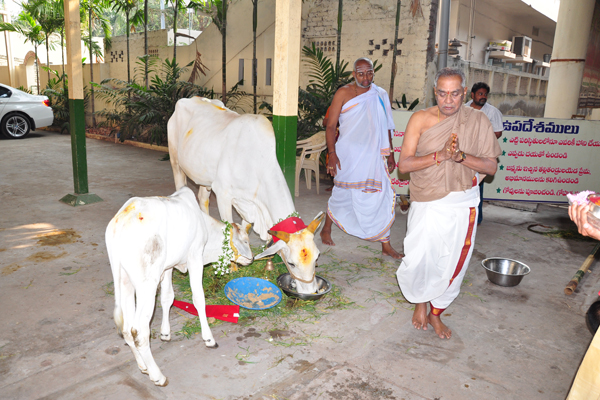 Goseva at Sri Sharada Parameswari Devasthanam
 Gosaala at Sri Sharada Parameswari Devasthanam
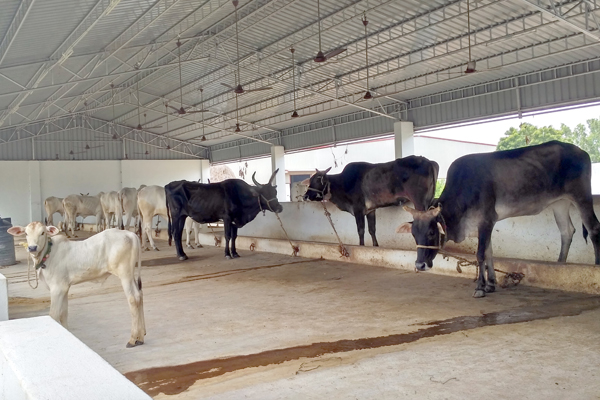 Gosaala at Marripalem